
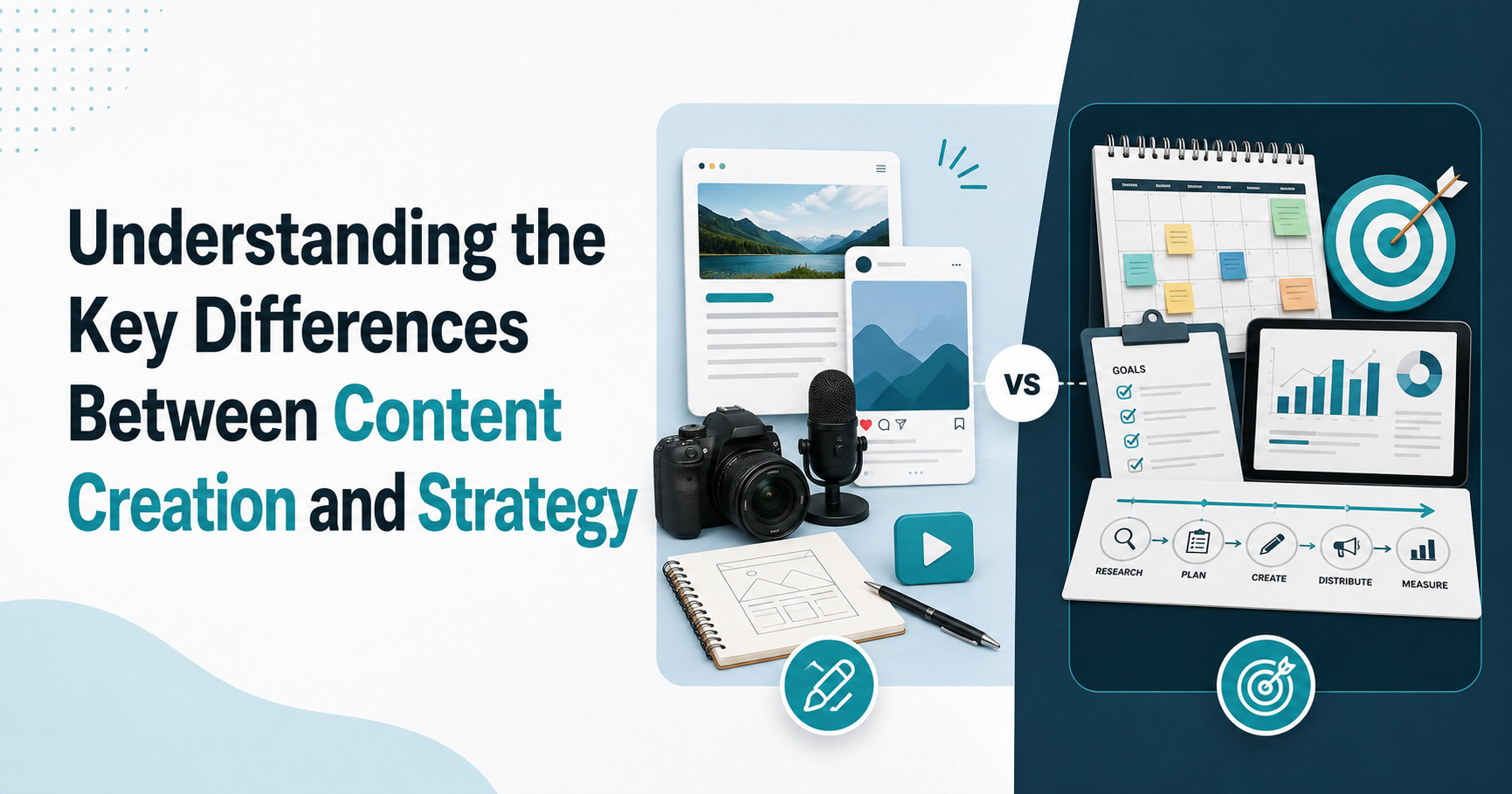
Content Creation vs Content Strategy: The Core Difference
If you’re a business owner, you’ve probably asked yourself about the difference between content creation and strategy—especially as you consider how to attract more customers online. The two terms sound similar, but they serve very different functions in digital marketing.
Content creation is about producing the actual materials your audience will see: articles, videos, social media posts, and more. Content strategy is the plan behind those materials. It’s about why you create, who it’s for, what topics you cover, and how everything connects to your business goals.
Think of it like this: If content creation is baking the cake, content strategy is choosing the recipe, the flavors, and when to serve it. Without a strategy, your content might not reach the right people or support your business objectives.
At RAD Web Marketing, we often see businesses producing lots of content but struggling to see results. That’s usually because the strategy piece is missing—or the two are getting mixed up. Let’s break down exactly how they differ, and what that means for your business.
What Is Content Creation? Tasks and Examples
Content creation is the hands-on work of making the actual materials your audience consumes. This includes:
- Writing blog posts and articles
- Filming and editing videos
- Designing graphics or infographics
- Recording podcasts
- Posting to social media
- Taking product photos
- Building downloadable resources, like ebooks or checklists
For example, if you own a pet supply store in Petaluma, content creation might mean:
- Writing a blog post about “Top 5 Dog Parks in Petaluma”
- Recording a video showing how to fit a harness on a dog
- Posting an Instagram photo of a new product on your shelves
The creator focuses on making content that’s clear, engaging, and valuable for your audience. The goal: attract attention, answer questions, entertain, or persuade someone to take an action.
Content creators often have skills in writing, photography, video production, or design. They’re the doers—the ones behind the scenes turning ideas into finished products.
But without a bigger plan, even the best-looking content can fall flat. That’s where strategy comes in.
What Is Content Strategy? Scope and Responsibilities
Content strategy is the process of planning, managing, and guiding all your content efforts. It answers the big questions before a single piece is created:
- Who is your target audience?
- What topics matter to them?
- What are your business goals?
- How will your content support those goals?
- When and where should you publish?
- How will you measure success?
A content strategist doesn’t just think about what to publish. They also consider:
- Content formats (blog, video, social media, etc.)
- Content calendar and publishing schedule
- Brand voice and messaging guidelines
- SEO and keyword targeting
- Repurposing and updating older content
- Tracking results and adjusting plans
Let’s say you’re a local landscaping company. A content strategist might create a plan like:
- Identifying that your ideal client is a homeowner aged 35-55 in Sonoma County
- Choosing topics homeowners search for, like “drought-tolerant landscaping”
- Setting a monthly blog schedule and a weekly Instagram posting plan
- Making sure each piece links back to key services you offer
- Defining how you’ll track leads from each content type
Content strategy sets the direction, so every piece you create pulls in the same direction. It helps you avoid wasted effort, connect with the right audience, and reach your goals faster.
Table: Key Differences Between Content Creation and Strategy
| Aspect | Content Creation | Content Strategy |
|---|---|---|
| Purpose | Produce content for your audience | Plan and guide all content efforts |
| Focus | Execution: writing, designing, filming | Planning: topics, channels, goals, timing |
| Skills Needed | Writing, design, photography, video, editing | Research, analytics, project management, marketing |
| Output | Blog posts, videos, graphics, posts | Content calendars, guidelines, reports |
| Measurement | Likes, shares, comments, views | Traffic, leads, conversions, ROI |
| Timeline | Day-to-day or weekly tasks | Quarterly or annual planning |
| Main Question | How do we make this piece engaging? | Why are we creating this content at all? |
Why Separating Creation from Strategy Improves Results
Many small businesses try to handle content by simply posting whatever comes to mind. This usually leads to scattered results. Separating creation from strategy can make your marketing much more effective.
- Clear direction: Strategy sets the goals and topics, so creators know exactly what to make and why.
- Consistent messaging: When strategy defines your brand voice, every piece of content feels like it belongs to you.
- Better time management: Creators focus on producing high-quality work, while strategists ensure each piece fits the big picture.
- Improved measurement: With a clear strategy, you can track which content drives results—and adjust as needed.
- No wasted effort: You stop creating content just for the sake of it and focus only on what supports your goals.
For example, a Petaluma dental office might have a strategy focused on attracting families. Without a plan, they might post random dental facts. With a strategy, they could create a series of “Dental Tips for Kids” videos, timed to launch before back-to-school season. This targeted approach is more likely to drive new patient calls.
At RAD Web Marketing, we’ve seen businesses double their website leads in a year simply by aligning their content creation with a smart strategy. The key is treating them as separate—but connected—functions.
Common Misconceptions About Content Creation and Strategy
- “If I just post often, I’ll get results.”
Frequency matters, but posting without a plan often leads to wasted effort. Quality and direction are more important than quantity.
- “Anyone can do content strategy.”
Strategy requires research, audience understanding, and marketing know-how. It’s more than choosing random topics.
- “Creators should set the strategy as they go.”
Mixing the two roles can blur focus and lead to inconsistent messaging.
- “Strategy is only for big companies.”
Even solo businesses benefit from a basic content plan. It helps every piece work harder for you.
- “Once I have a strategy, I’m done.”
Strategy should be reviewed and updated as you learn what works.
- “Content strategy is just SEO.”
SEO is part of strategy, but a true strategy looks at bigger goals—like brand building, engagement, or lead generation.
How to Decide What Your Business Needs: Creation or Strategy?
Do you need content creation, strategy, or both? Here are some ways to decide:
- Do you have a plan?
If you don’t know your audience, key topics, or goals, you need a strategy first.
- Are you already producing content?
If you’re making content but not seeing results, a strategy review can help you refocus.
- Does your content feel random?
If your blog or social feeds lack direction, a strategy will bring clarity.
- Is your challenge time or ideas?
If you know what to publish but can’t keep up, you likely need help with creation.
- Do you track results?
If you’re not measuring content performance, start with a strategy to define success metrics.
Most businesses need both: a clear strategy to guide their efforts, and skilled creators to bring that plan to life. If you’re unsure, a quick audit from a digital marketing team like RAD Web Marketing can reveal where to focus next.
Who Should Handle Content Creation vs. Content Strategy?
Assigning the right people to each role makes a big difference.
- Content creation is best handled by people with creative skills: writers, designers, photographers, videographers, or social media specialists. They turn ideas into finished content that’s visually appealing and easy to consume.
- Content strategy is often a marketer, strategist, or agency with experience in planning, research, and analytics. They know how to align content with business goals and track the impact on your bottom line.
Some small businesses have one person wearing both hats. That’s normal when you’re starting out. But as your business grows, splitting the roles can help you get better results:
- Strategy sets the “what, why, and when”
- Creation handles the “how”
For example, a winery in Sonoma might hire a strategist to develop a year-long plan based on wine club promotions and seasonal events. Then, they could hire a photographer and writer to produce the tasting notes, event photos, and blog posts that fit that plan.
If you lack time or expertise, you can outsource either role. Many agencies—including RAD Web Marketing—offer both content planning and creation as separate services, so you can fill gaps as needed.
The Difference Between Content Creation and Strategy in Digital Marketing
In digital marketing, the difference between content creation and strategy is especially important. The internet is crowded, and attention spans are short. You need both a plan and strong execution to stand out.
For further reading, see Content strategy vs content marketing from dotit.org.
Consider these real-world scenarios:
- A local retailer posts daily on Instagram, but gets little engagement. They’re creating content, but lack a strategy—so the posts don’t connect with their target customers.
- An accounting firm publishes two in-depth guides per year, both carefully planned to answer top client questions. Each guide generates leads and shares. They have a strategy guiding their content creation, resulting in better outcomes from fewer pieces.
Here’s how this plays out in digital marketing:
- SEO: Strategy identifies the keywords and topics that attract your ideal client. Creation produces the articles and videos that rank on Google.
- Social media: Strategy chooses the right platforms and messaging. Creation crafts the posts, photos, and stories your followers see.
- Email marketing: Strategy sets the schedule and goals. Creation writes the subject lines and body copy that drive opens and clicks.
Businesses that treat content creation and strategy as separate but coordinated are more likely to see results—whether that means more web traffic, leads, or sales. Each function supports the other, and together they move your business forward.
If you’re ready to get more from your online marketing, start by clarifying the difference between content creation and strategy. Define your goals, build a plan, and then create with purpose. And if you need expert help with any step, call RAD Web Marketing in Petaluma at 707-205-3600. We’re here to help your business grow with smart, effective digital marketing.
Frequently Asked Questions
What is the main difference between content creation and content strategy?
Content creation is the process of producing materials like blog posts, videos, or social media content, while content strategy is the planning behind what you create, why, and for whom. Strategy ensures your content aligns with your business goals and reaches the right audience.
Why is having a content strategy important for my business?
A content strategy helps you target the right audience, choose relevant topics, and achieve your business objectives. Without a clear strategy, you might create lots of content but struggle to see meaningful results or growth.
Can I do content creation without a content strategy?
You can create content without a strategy, but it may not attract the right customers or support your goals. Pairing content creation with a solid strategy—like those offered by RAD Web Marketing in Petaluma—ensures your efforts are effective and focused.
How do I know if my business needs content strategy help?
If you’re producing content but not seeing increased engagement, leads, or sales, it’s a sign your strategy might need improvement. Consider consulting experts like RAD Web Marketing at 707-205-3600 to review your approach and boost your results.
What tasks are included in content creation versus content strategy?
Content creation involves writing, designing, filming, and publishing materials for your audience. Content strategy covers planning topics, scheduling, setting goals, and analyzing what works best for your business.











































0 Comments